
How Shoulder Tension Leads to Jaw Pain
The Vicious Cycle
Slouching over a laptop → rounded, tense shoulders → forward head → strained neck → altered jaw position → jaw clenching → headaches or facial pain → more shoulder tension → repeat.
The Laptop Stand Paradox
A laptop stand seems like the obvious solution - and, to be fair, it does bring your screen to a better height. But without other adjustments, it can create a different problem.
Reaching for the now-elevated keyboard often lifts the shoulders into a constant shrug, keeping the upper traps switched on all day. With no armrest support, your arms end up “floating”, demanding continuous effort simply to hover over the keyboard.
That load travels straight up the chain. The neck stiffens to hold your gaze, and the jaw tightens in response. The small muscles at the base of the skull grow short, tight, and protective. It often shows up first as a strained, tightened expression - something others may notice long before you feel the headache that follows.
(continues from Thread the Needle for Shoulder–Neck Relief)
The muscles attaching at the base of the skull are closely linked to the muscles that control jaw movement, which means shoulder tension can travel further than most people realise - all the way into the jaw.
Here’s the chain reaction: when the shoulders are tense or fatigued, the neck compensates by tightening. As your head drifts forward - almost unavoidable with laptop work - the jaw’s resting position changes. Your body responds by clenching to stabilise the head, and suddenly you’re stuck in a loop.
Breaking the Cycle
The most honest solution? Moving more often. Regular breaks interrupt the pattern of hunching, clenching, and shallow breathing. It’s not indulgent - t’s basic maintenance. Movement disrupts the neuromuscular pattern that drives chronic tension.
Where Yoga Fits In
For the desk-bound body, yoga works as both re-alignment and re-education. It doesn’t only release tension; it strengthens the muscles that should be supporting you in the first place, giving you a more reliable “neutral” to return to. Once your body knows what balanced posture feels like, you’re far more likely to hold it at your desk. Yoga amplifies movement by retraining the shoulders, neck, and spine to work together without strain.
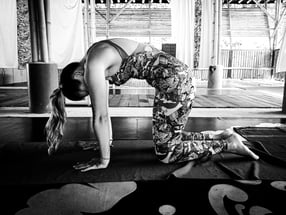
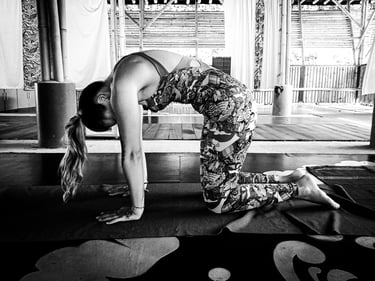
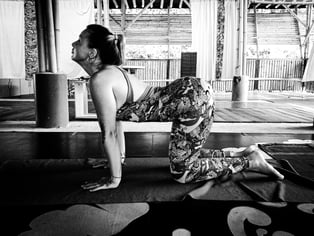
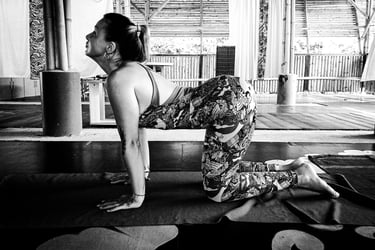
Endnote : The Most Direct Remedy
For this exact kinetic chain, seated Cat/Cow is the simplest and most effective reset. It mobilises the spine, shoulders, and neck in the exact pattern they’ve been stuck in. The secret isn’t how many Cat/Cows you do — it’s doing them every hour. Consistency does more for your spine than any single long session ever will.
Thread the Needle - even done standing against a wall - gives a targeted release when one side is tighter.
More Insights