
Forward Folds : Gentle & Transformative
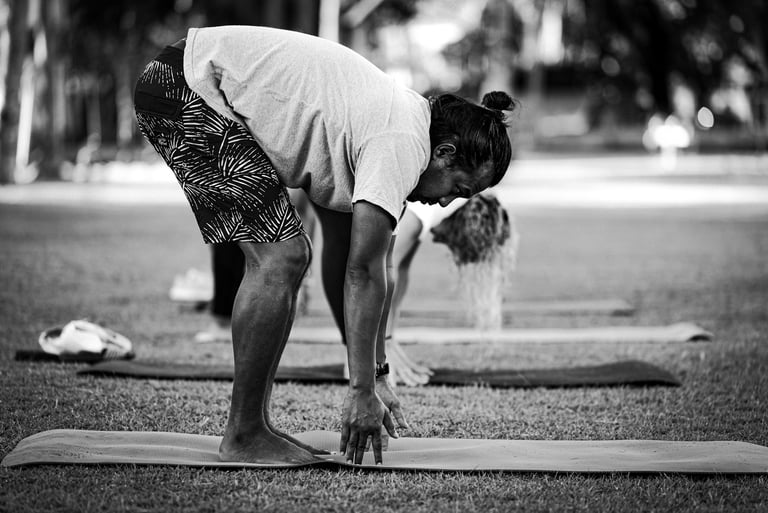
Forward folds are less about bending and more about how the body organises itself in relation to gravity. When done well, they reduce tension through the spine, hips, and hamstrings by allowing the body to fold with support rather than strain.
Folding, Not Forcing
In a forward fold, the aim is not to pull yourself deeper, but to allow the body to settle.
When the spine, hips, and legs are organised well, the movement distributes naturally. When they are not, the body compensates - often through rounding or unnecessary tension.
This is often most noticeable in the hamstrings, where pushing deeper can increase resistance rather than reduce it.
This response is often linked to how the body protects itself during stretching, as explained in Stretch Reflex.
Seated Forward Fold
Seated forward folds often appear simple, but they require attention.
Tight hips and hamstrings can limit the movement, leading to compensation through the lower back. Slightly bending the knees and allowing the pelvis to move more freely can reduce strain and improve the quality of the fold. This is often most noticeable in the hamstrings, explored further in How Do You Release Tight Hamstrings?
The aim is not to match a shape, but to find a position where the body can release without resistance.
What Changes Over Time
As tension reduces, the fold becomes less effortful.
The breath settles, the spine lengthens more easily, and the body begins to release rather than hold. This is where the calming effect of forward folds comes from - not just the position itself, but the way the body responds within it.
More Insights