
How Do You Release Tight Hamstrings?
Stretching
Stretching before and after activity does help, but the real work is neurological. It’s less about force and more about learning to let the muscle release when needed. This protective response is part of the body’s natural mechanism, described in Stretch Reflex.
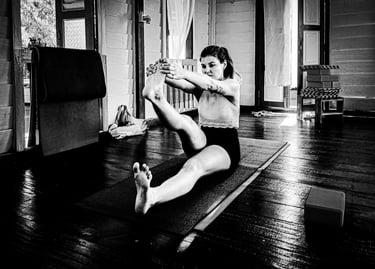
In Heron Pose, the strong sensation running through the extended leg often triggers an unconscious contraction in the hamstring you are trying to lengthen. When you ease that reflex and allow the muscle to soften, the leg often comes a little higher without additional pull. The spine stays long, and, when your awareness is sharp, the shoulders stay steady rather than creeping up.
We don’t create flexibility by dragging our way into it. We create space by releasing the body’s protective brakes in a controlled, intelligent way. Repetition builds a hamstring that knows how to stay long, strong, and relaxed under tension - exactly what you need for resilient performance, especially if you’re prone to those “all in at the weekend” habits.
Tight hamstrings are not just a flexibility issue. They often reflect how your body is managing load through the hips and spine. Improving them requires better support and coordination, not simply stretching further.
For many desk-bound people, the quads dominate. Add cycling or running at the weekend and the imbalance grows. When the hamstrings fatigue, their recruitment and control start to break down - the communication between brain and muscle becomes less precise. That’s when protective control drops, and a strain or tear can happen during the high-force phases of movement.
Final note
A common misconception is that serious hamstring tears happen simply because the muscle wasn’t stretched enough. In reality, many injuries stem from fatigue and loss of control, not purely from a lack of length.
Before activity: dynamic stretching to wake up the system.
After activity: static stretching to help the muscles settle and release.


More Insights