
Thread the Needle for Shoulder–Neck Relief
How the Pattern Develops
Many people notice a tight, dragging ache that runs from the shoulder blade to the base of the skull. This reflects a shared system of muscles working harder than necessary.
The trapezius - a broad muscle spanning the upper back, shoulders, and neck - is often involved. When it becomes overactive through stress, posture, or repetitive use, it begins to pull on its attachment points in the neck. Over time, this can lead to stiffness, headaches, and persistent discomfort.
Tension between the shoulders and neck is often the result of how load is carried through the upper body. When one area becomes overactive, the surrounding muscles - particularly through the neck - begin to compensate. Relieving this requires both redistribution of effort and changes in daily habits.
Working with the Pattern
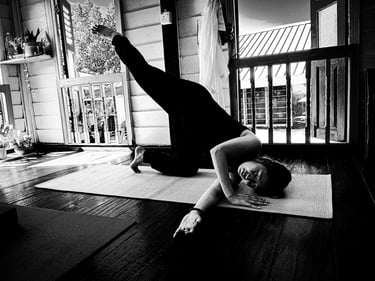
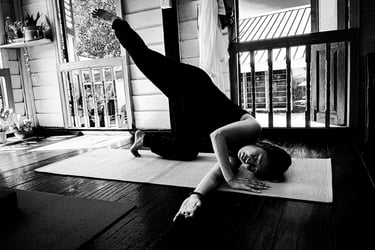
Thread the Needle introduces a gentle rotation through the spine and shoulders, allowing this pattern to become more visible.
Variations where the top arm extends overhead tend to involve the full shoulder–neck chain, helping the area to release while maintaining support. The aim is not to stretch aggressively, but to allow the body to reorganise how tension is distributed.
Why It Keeps Returning
Relief from a pose is often temporary if the underlying pattern remains unchanged.
When discomfort consistently appears on one side, it usually reflects repeated habits that load that side more heavily.
Common Patterns
Holding the phone between ear and shoulder
Working with a desk or mouse setup that lifts one shoulder
Driving with one arm fixed or overextended
Sleeping with the head consistently turned to one side
Carrying a bag on the same shoulder
Resting the head on one hand while working
These patterns are small, but over time they reinforce asymmetry.
For a deeper look at how the pose itself works, see Thread the Needle: Stress Relief.
More Insights