
Why Sitting Makes Piriformis Pain Worse
Other Factors
There are, of course, other contributing factors, including overuse (such as running or cycling) and traumatic injury (for example, a fall onto the buttocks). Proper diagnosis matters, as both the cause and the specific pain pattern need to be clearly identified before treatment is chosen.
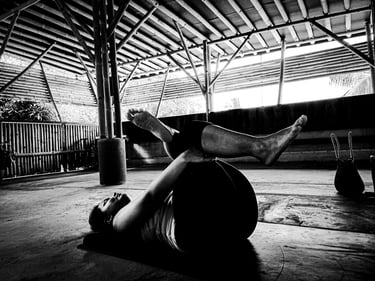
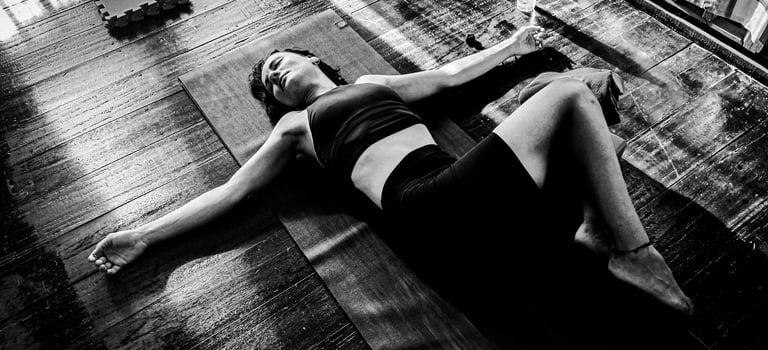
While short-term rest can be helpful, it is most effective when followed by gentle, targeted stretching of the piriformis and surrounding muscles. In practice, this often overlaps with well-designed protocols for non-specific low back pain. Reclining poses are particularly effective, as they neutralise gravity and allow intensity to be carefully adjusted.
When lying on your back, body weight is removed from the hips and lower back. This allows you to:
Isolate the piriformis without compressive load
Use leverage and props to precisely regulate stretch intensity
Relax more fully, as stabilising muscles are no longer required for balance
What to Do About It
Long periods of sitting, particularly in the constrained space of an airplane seat, are a well-documented and common trigger for piriformis syndrome flare-ups. The piriformis is a small, deep muscle in the buttock that helps rotate and stabilise the hip.
Typically, symptoms present in two main ways:
When sitting:
A deep, aching pain is felt in the buttock, often radiating down the back of the leg as sciatic-type pain. The firm seat directly compresses the piriformis, especially when hip position is fixed for long periods.
When walking:
The pain may shift or sharpen into a shooting sensation as the actively contracting piriformis irritates the sciatic nerve. This can occur on its own or alongside sitting-related symptoms.
This is a framework, not a prescription. The exact poses, sequencing, and intensity should ideally be personalised following professional assessment.
Practical considerations
Sitting on a wallet or phone in a back pocket creates an asymmetrical pelvic tilt, which increases compression through the piriformis and aggravates symptoms. A motorcycle seat is arguably one of the most hostile environments for the piriformis and sciatic nerve, combining prolonged static sitting with constant dynamic strain.
When reclining, the piriformis can genuinely “let go”, because it is no longer required to stabilise the femur in the hip socket. That reduction in demand is often the turning point for symptom relief.
Lasting relief doesn’t come from force or fear of movement, but from positioning the body so the piriformis can disengage. From there, change becomes possible.
PS: This is rarely the result of a single plane ride. Symptoms tend to emerge from a compound effect - repeated exposure to constrained seats, prolonged sitting, and cumulative compression over time.

More Insights