
Poor Sleep and Back Pain
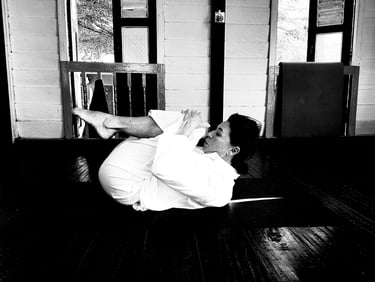
But the cycle isn’t just physical. When we’re sleep-deprived, emotional resilience drops. Starting anything helpful feels harder. We’re less likely to do the very practices that support us - like a simple reclining butterfly - because the cognitive energy to begin just isn’t there.
Breaking into this cycle means lowering the activation threshold. Not do more yoga, but: can you do one reclining butterfly before you even get out of bed? Can you take five slow breaths while still lying down?
When sleep-deprived, the goal isn’t an optimal practice. It’s a practice that’s easier to start than to skip. That’s also how progression actually begins.
A few other essentials to pay attention to:
You know that feeling: a restless night, and you wake up with your back tighter, achier, and more sensitive than when you went to bed.
Poor sleep plays a major role in back pain. It increases muscle fatigue, drives inflammation, and lowers pain tolerance. When sleep is consistently disrupted, tissues don’t recover properly, pain intensity rises the next day, and the cycle reinforces itself: pain disrupts sleep, and poor sleep amplifies pain.
Get as much natural daylight as you can.
If you’re familiar with breathing practices, long, gentle breaths at bedtime can help settle the system.
Avoid screens in the evening.
There are endless tips and tricks out there - and not everyone has the luxury of an afternoon nap - but these essentials consistently make a difference.
More Insights