
Alignment Is Load Management
The most frequent culprit is the shoulder. When the muscles stabilising the shoulder blades are not actively engaged, the shoulders drift towards the ears. This narrows the thoracic outlet – the passage through which the major nerves (ulnar, median, and radial) and blood vessels travel into the arm. Reduce that space and the result is pins and needles, tingling, or numbness in the hands. The sensation is distal, the problem is proximal.
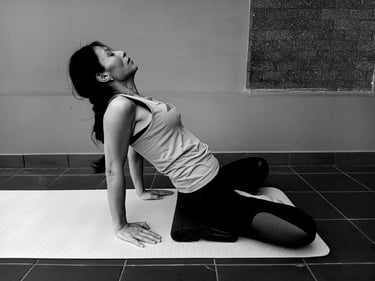
Arm position compounds this. If the arms are not perpendicular to the floor – wrists stacked under shoulders – the skeleton cannot take the load efficiently and soft tissue compensates. Hands placed too far forward or back alter the angle enough to change the demand. A practical starting point is to place the hands roughly a forearm’s length from the hips to approximate a vertical arm line, then adjust as needed.
Alignment determines how load travels through the body. When joints are stacked and muscles share the work, force is distributed efficiently; when they are not, strain accumulates in the wrong places and symptoms appear somewhere else.
The reverse plank is a useful example of how poor alignment creates problems that feel unrelated to their source. A common complaint – numbness or tingling in the hands – may seem minor, but it is a direct signal that something upstream in the kinetic chain is off.
Time amplifies everything. The longer a misaligned position is held, the greater the neural irritation and circulatory restriction become. A faint tingle becomes difficult to ignore.
One more common detail: many people lock the elbows into hyperextension under load. A small, deliberate softness at the joint restores neutrality and immediately reduces strain through the arm.
The reverse plank illustrates a broader principle: discomfort in one area is often a message about mechanics elsewhere.
More Insights